
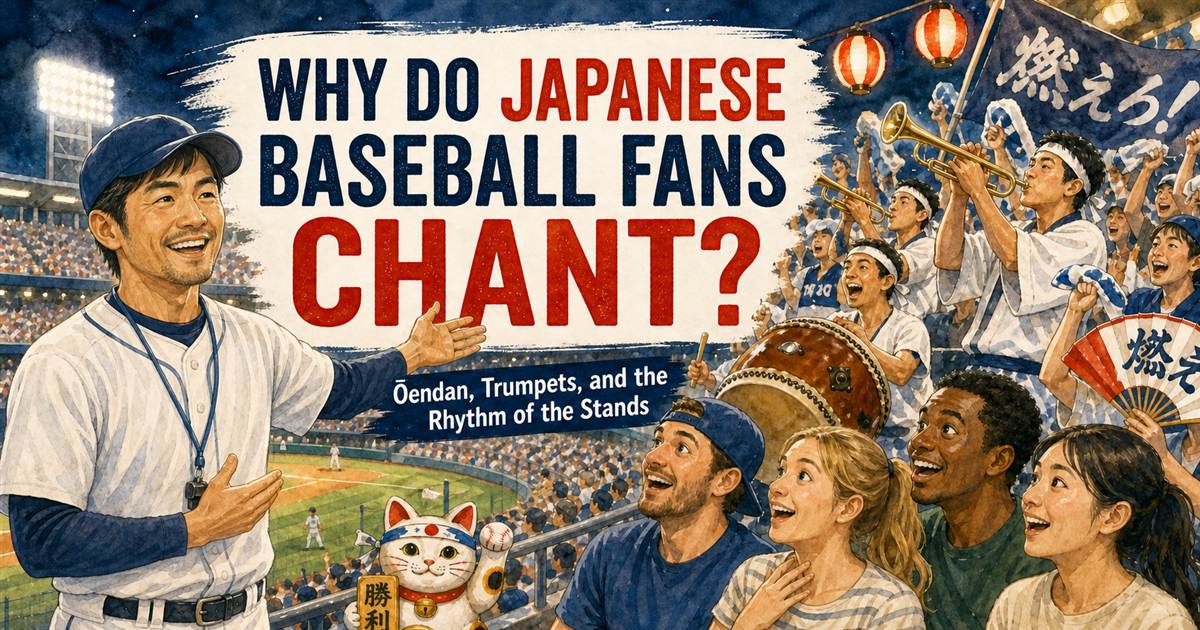
I brought a foreign friend to a Japanese baseball game once. The first trumpet note sounded, an entire section stood up, and he looked at me as if we had accidentally walked into a concert.
“Do they do this for every batter?” he asked.
Yes. Pretty much. One batter, one song, a drumbeat, clapping, towels and several thousand people who somehow know exactly when to shout. Meanwhile, the man in the seat beside us was calmly eating yakisoba. Japan is good at putting a festival and an ordinary Tuesday in the same place.
If you are searching for Japanese baseball cheering culture, this is probably the scene you want explained. Why do Japanese baseball fans chant? Who controls the trumpets? Must visitors join? And why does the stadium suddenly become quieter when the other team bats?
I am a Japanese Papa Coach. My usual field is smaller, dustier and far less musical, but the same idea reaches youth baseball too: cheering is not only noise. It is a way of giving a player courage and turning strangers into one side of the stadium.
What is Japanese baseball cheering culture?
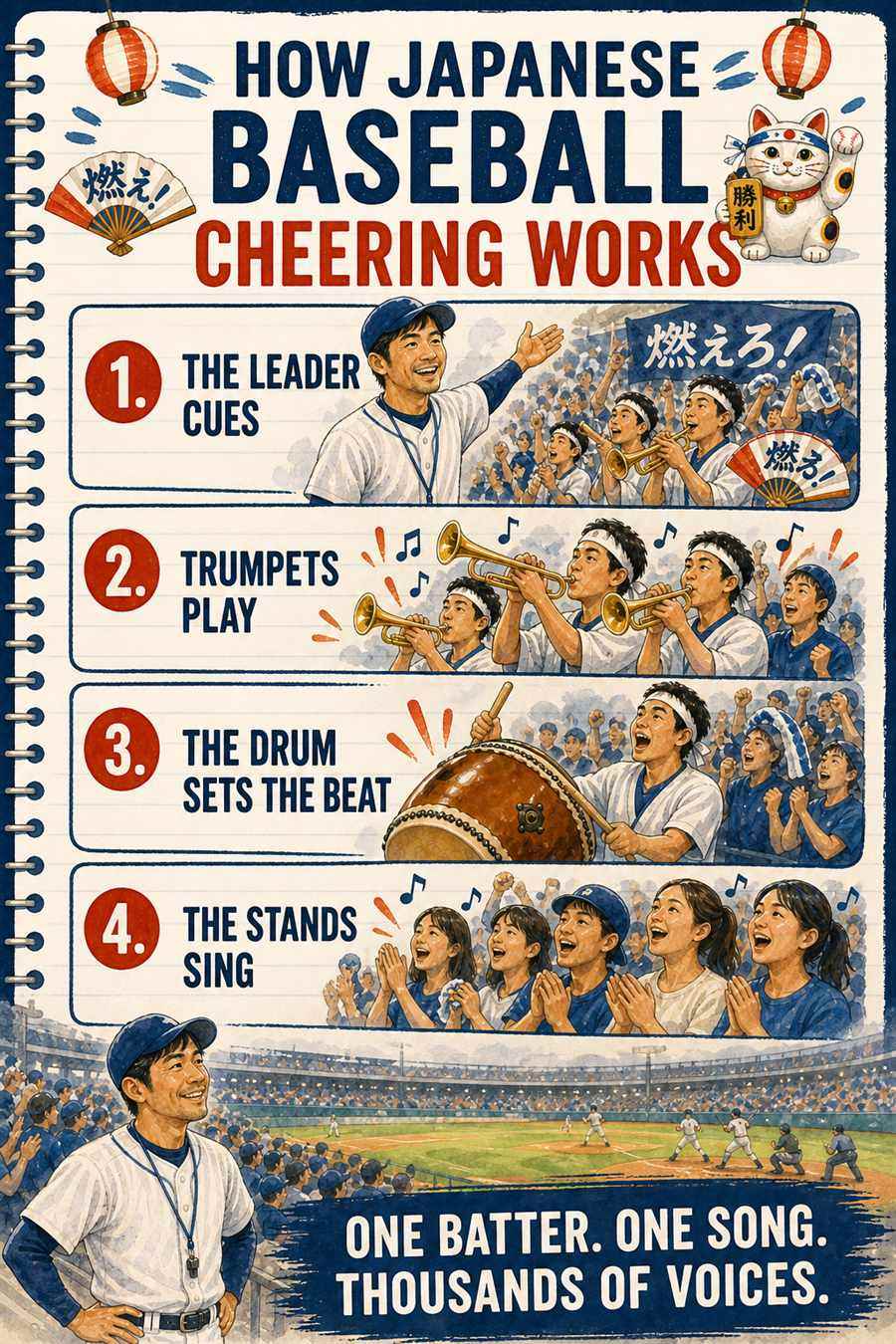
At many Nippon Professional Baseball games, supporters do not wait for a home run before making noise. Organized cheering happens while their team is batting. A recognized cheering group—commonly described as an ōendan—leads the rhythm with trumpets, drums, flags and hand signals.
Each player may have a dedicated song. The melody begins as the batter walks up, and fans repeat it through the plate appearance. Chance themes appear when runners reach scoring position or the team needs a late rally. The result feels less like random shouting and more like a live soundtrack that follows the game.
 初心者ママ
初心者ママWhat should a reader check first about “Why Do Japanese Baseball Fans Chant? Ōendan, Trumpets,…”?
 パパコーチ
パパコーチStart with the actual situation, the applicable rule, and safety—not a stereotype.
Why do Japanese baseball fans chant for every batter?
The simple answer is participation. In an MLB stadium, many fans react to the play. In a Japanese cheering section, fans also try to influence the emotional temperature before the play happens.
The song says, “You are not facing this pitcher alone.” The clapping gives nervous hands something to do. The repeated words allow a first-time visitor to join without knowing much Japanese. Even a quiet fan can wave a towel on the beat and suddenly feel included.
The crowd is not background music. For one half-inning, it becomes part of the offense.
Does chanting make the ball travel farther? Probably not. If trumpets added exit velocity, every batting coach would carry one. But confidence, attention and atmosphere are real parts of sport. Fans are trying to lend energy, not rewrite physics.
What does ōendan mean?
Ōendan (応援団) literally refers to a cheering group or support squad. The culture developed through Japanese schools and universities and later became a major feature of professional baseball. Modern NPB cheering groups coordinate player songs, instruments, flags and the timing of chants.
This does not mean every noisy person with a trumpet can start conducting Section 12. Official groups work within league and stadium rules. Instruments, large flags and where they may be used can vary by venue and organization.
Why does the stadium get quieter when the visiting team bats?
Japanese baseball cheering is often divided by offense. Home supporters sing when the home team bats; visiting supporters take over when their team bats. The other side usually does not try to drown them out continuously.
That creates an unusual rhythm: blue side, red side, trumpet, silence, explosion, reset. It is competitive, but there is also an invisible turn-taking system. You cheer for your player rather than spending nine innings insulting the opponent.
Of course, not every fan behaves perfectly. Baseball still contains humans. But the basic design is surprisingly orderly for something involving drums and thousands of plastic bats.
初心者ママHow does “Do you have to chant at a Japanese…” change the answer?
パパコーチThe surrounding situation matters. Avoid turning one example into a universal rule.
Do you have to chant at a Japanese baseball game?
No. You are allowed to watch baseball quietly. Nobody removes your ticket because you missed the third verse.
- Want the full experience? Choose an outfield cheering section and follow the fans around you.
- Prefer to watch strategy? Infield seats are usually calmer.
- Bringing a young child? Check the sound level and seat location; drums and trumpets can feel very loud.
- Supporting the visiting team? Confirm which section is allocated to away supporters.
- Do not know the song? Clap first. The words can come later.
The best rule is simple: read the room. Stand when your section stands, keep aisles clear, and do not wave a towel into someone else’s dinner. Respect is sometimes very practical.
Five sounds you may hear in the Japanese stands
- Kattobase! A familiar encouragement meaning roughly “Hit it far!”
- Player-name chants. The name is fitted to a repeated rhythm.
- Chance themes. Special songs for scoring opportunities.
- Trumpet melodies. They carry the tune across a noisy stadium.
- Drum cues and claps. These keep thousands of people together even when singing drifts.
You may also hear team-specific phrases and regional jokes. Do not worry about perfect pronunciation on your first visit. Enthusiasm is easier to forgive than a detailed lecture delivered during a full count.
Is Japanese baseball cheering the same at youth games?
No. A local youth game is not a miniature NPB stadium. Parents may clap, call a player’s name or use simple team cheers, but trumpets and formal cheering groups are not universal. Tournament rules, neighborhoods and teams differ.
What does carry over is the belief that voices matter. A child on the bench can still help the team. A parent’s encouragement can settle a nervous hitter. Unfortunately, the opposite is also true: one adult’s angry commentary can make a small field feel even smaller.
For more on the routines surrounding Japanese youth teams, see our introduction to youth baseball in Japan. I will also explain the bows, cleaning and other field customs in a separate English guide.
A final note from Papa Coach
The first time you hear a Japanese cheering section, it may sound like everyone arrived with sheet music. They did not. Most people simply learned by sitting beside someone who already knew.
That may be the most Japanese part of the experience. Nobody stops the game to explain the whole system. A leader raises a hand. The trumpet starts. The person beside you claps twice.
You copy them. A few innings later, you are no longer watching the crowd.
You are in it.
Sources and further reading
- MLB: History of Japan’s baseball cheer squads
- Japan National Tourism Organization: Baseball in Japan
- Baseball Federation of Japan: Japanese fans and stadium atmosphere
Editor’s note: Cheering rules, instruments, songs and designated sections vary by team, stadium and competition. Check the current venue guidance before attending.