
The game was over. At least, I thought it was.
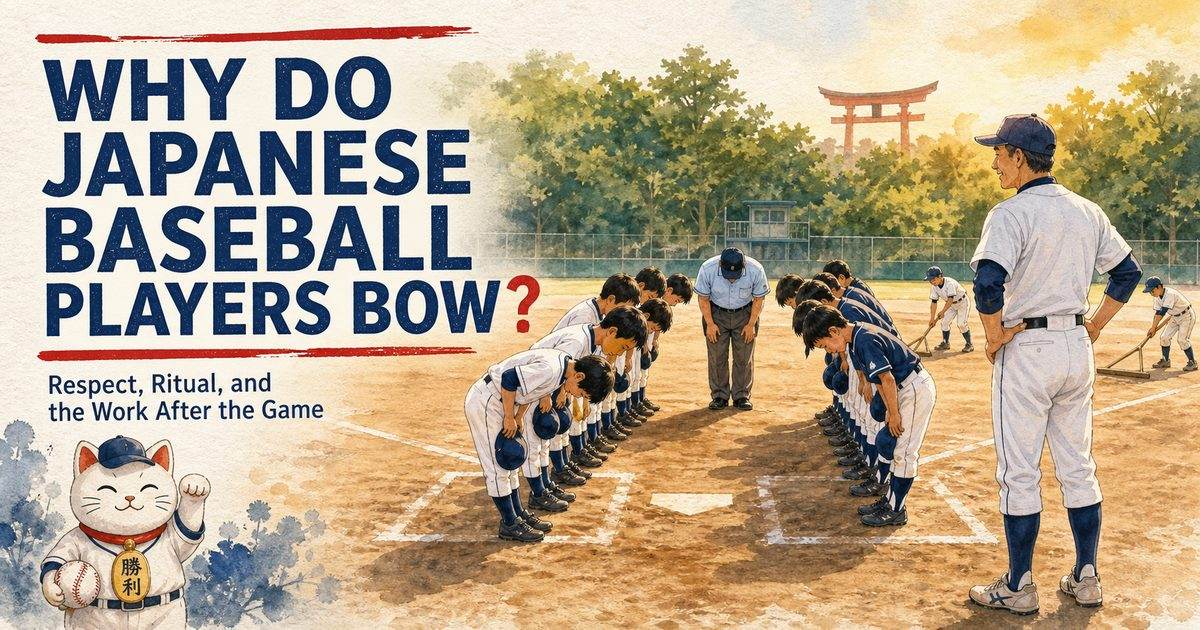
The final out had been called, the scorebook was closed and several parents were already reaching for car keys. Then both teams walked back toward home plate, removed their caps and lined up. One voice called, “Rei.” Twenty children bowed.
A few minutes later, the same children who had just been stealing bases and arguing over foul territory were dragging rakes across the infield. The cleanup crew had arrived. It was also the roster.
If you have watched Japanese baseball from overseas, you may have noticed the bows. If you visit a youth practice in Japan, you may also see players greet the field, thank an umpire, carry equipment and smooth the dirt before going home. So, why do Japanese baseball players bow—and why does the work continue after the game?
I am a Japanese Papa Coach. I have stood on both sides of that line: sometimes impressed by the children, sometimes wondering whether an adult had confused “tradition” with “because I said so.” The short answer is respect. The more honest answer is that respect only matters when it becomes an action.
Why do Japanese baseball players bow?
In Japanese baseball, the bow is usually a compact way to say several things at once: thank you to the opponent, thank you to the umpire, and thank you to the people and place that allowed the game to happen.
This is not unique to baseball. Bowing is woven into Japanese greetings, gratitude and apology. In sport, however, it becomes visible because the whole team often moves together. Before and after many school and youth games, players line up around home plate, remove their caps and bow while saying onegaishimasu before the game or arigato gozaimashita afterward.
Onegaishimasu is difficult to translate with one English phrase. On a baseball field, it carries the feeling of “Let us play well together” or “Thank you in advance.”
The Japan High School Baseball Federation says the formal pre- and post-game greeting dates back to the first national tournament in 1915. Its explanation is refreshingly practical: show gratitude and respect, but do not bow so often during play that the ritual slows the game. Even manners need a pitch clock, apparently.
 初心者ママ
初心者ママWhat is easy to overlook in “Why Do Japanese Baseball Players Bow? Etiquette, Cleaning,…”?
 パパコーチ
パパコーチLook at what happened before and after, then verify the rule or custom that actually applies.
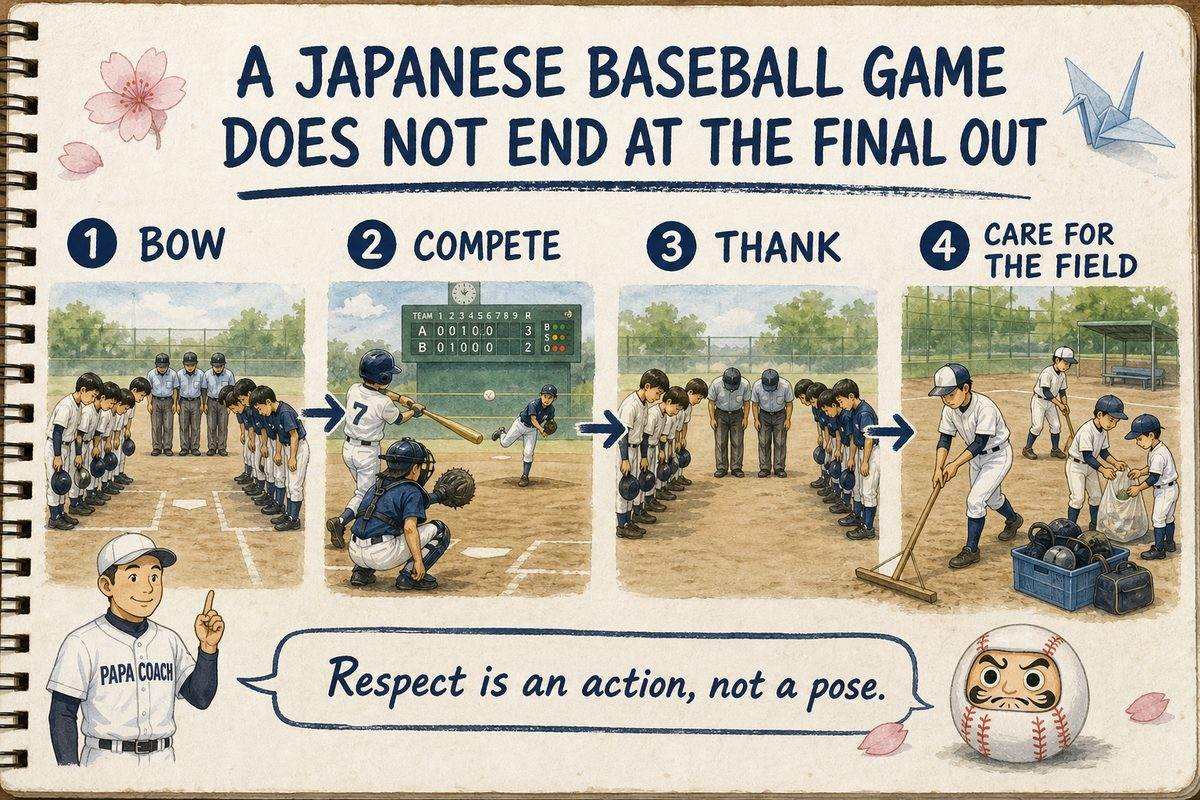
A Japanese baseball game does not always end at the final out
After a youth game, the field may suddenly look like a very organized construction site. Players rake around the bases. Someone fills the hole in front of the pitching rubber. Catcher’s gear returns to its bag. Bottles and tape disappear from the bench.
At first, a foreign visitor might think this is a special ceremony. Most of the time, it is less romantic: the next team needs a safe field, and nobody else is coming to rescue us from the mess we made.
That is one reason Japanese baseball players clean the field. The habit also connects with school life in Japan, where children commonly help clean classrooms and shared spaces. The idea is not that cleaning makes a player hit .300. If a rake could do that, every coach would order twelve. The lesson is that using a shared place creates a responsibility to leave it ready for the next person.
What Japanese youth baseball etiquette is trying to teach
The visible customs are easy to photograph: the straight line, the synchronized bow, the clean infield. The less visible lesson takes longer.
- The opponent is necessary. Without another team, there is no game.
- The umpire is part of the game. You may dislike a call, but screaming does not rewrite it.
- The field is borrowed. Community grounds are often shared by many teams.
- No job belongs only to the bench player. Starters can carry equipment too.
- Gratitude should be visible. A quiet “thank you” is good; helping is better.
Japanese youth baseball traditions often emphasize the group. That can create wonderful moments. A child who struck out can still encourage the next hitter. A regular can rake beside a substitute. Older players can show younger ones how to leave the dugout properly.
And yes, sometimes the line is crooked, one boy is holding the rake upside down and another has mysteriously become fascinated by a cloud. They are children, not a samurai documentary.
When tradition becomes an empty performance
Now for the uncomfortable part. A bow is not proof of good character. A team can bow beautifully and still treat a child badly five minutes later.
I have seen adults demand loud greetings from children while barely greeting other parents themselves. I have seen one child cleaning while teammates talk nearby. I have heard “This is the Japanese way” used as a shortcut when someone did not want to explain a rule.
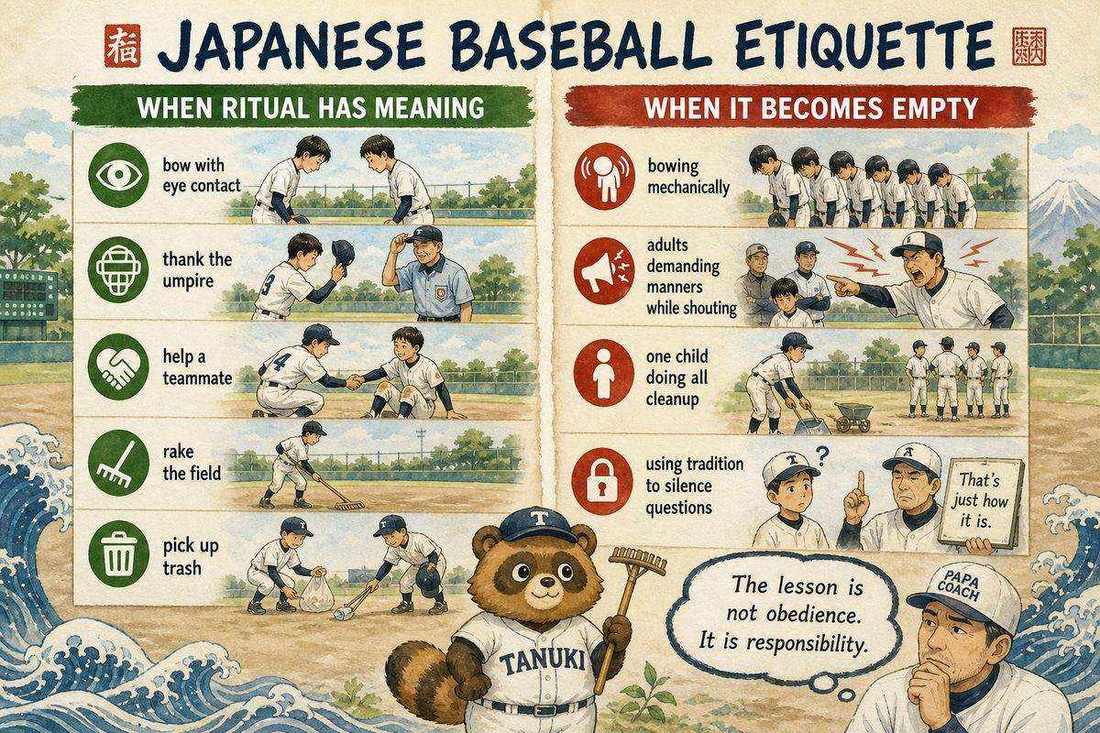
That is where Japanese baseball etiquette can be misunderstood. The lesson should not be blind obedience. It should be responsibility: notice the people around you, care for what you used and control your behavior when emotions rise.
If adults shout at umpires, leave cleanup to the same families and then order children to bow deeper, the children notice the contradiction. Kids may forget the score. They rarely forget hypocrisy.
初心者ママWhat is easiest to miss in “Do all Japanese baseball teams follow the same…”?
パパコーチThe overlooked detail is often the difference between a general custom and the rule used at that event.
Do all Japanese baseball teams follow the same traditions?
No. Japan does not have one national youth-team personality.
A community club, a Little League organization, a junior-high school team and a high-school program may have different routines. Regional customs and individual coaches also matter. Some teams bow toward the field when entering and leaving. Others limit formal greetings to games. Some make field care part of every practice; others have staff or shared schedules.
For a wider introduction to team culture, parent duties and the surprising importance of base stealing, see our guide to youth baseball in Japan.
The meaning also changes with age. For a seven-year-old, “respect the field” may mean putting one ball back in the bucket. For a high-school player at Koshien, the dirt itself can carry years of effort and the end of a baseball chapter.
Five Japanese baseball words that help explain the scene
- Rei (礼): a bow or expression of respect.
- Aisatsu (挨拶): a greeting; teams often value clear greetings.
- Onegaishimasu (お願いします): a phrase used before beginning together.
- Arigato gozaimashita (ありがとうございました): “Thank you very much,” commonly used after the activity.
- Seibi (整備): maintenance or preparation, including smoothing and caring for the field.
You do not need perfect Japanese to understand the rhythm. Watch what happens before the first pitch and after the last out. The verbs explain the culture: greet, play, thank, carry, rake.
What international families should do
If your child joins a baseball team in Japan, copying every movement without understanding it is not the goal. Ask what the team expects and why.
- Watch one complete practice, including arrival and cleanup.
- Ask when players bow and what words they use.
- Confirm who maintains the field and equipment.
- Help your child learn the routine without turning one forgotten greeting into a family crisis.
- Pay attention to whether adults model the behavior they demand.
A healthy team will explain its customs. A less healthy one may simply say, “Everyone knows.” New families do not know. That is why they are asking.
A final note from Papa Coach
Why do Japanese baseball players bow? Because a baseball game is made by more people than the nine standing on the field.
The opponent gives you someone to compete against. The umpire gives the game a decision. Parents and volunteers give it time. The field gives every mistake a place to land.
The bow is the visible part. What happens next tells you whether it meant anything.
Sources and further reading
- Japan High School Baseball Federation: Rei begins and ends the game
- Nippon.com: How to Bow and the role of bowing in Japanese sport
- Web Japan: Cleaning habits in Japanese schools and public life
- Nippon.com: A Century at Koshien
Editor’s note: Customs vary by team, organization, region and age group. This article explains common practices and the author’s field experience, not a rule followed identically throughout Japan.